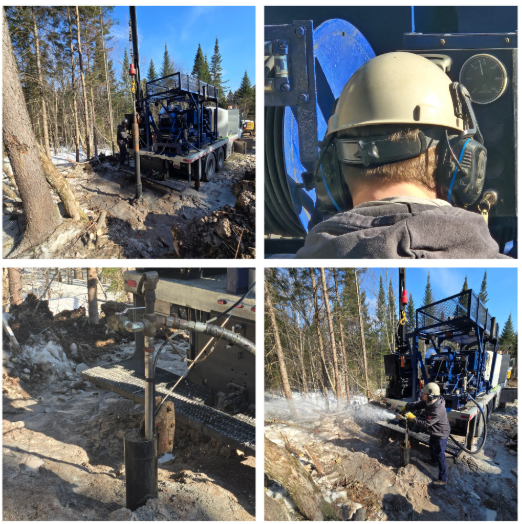
Well hydrofracturing involves opening up cracks in the rock to facilitate water flow. In this specific case, it was a newly drilled 400-foot (105-meter) well with a low flow rate of ten gallons of water per hour, making it an unviable well. This is a typical case; it happens very often in the Laurentians and Lanaudière regions that water yield is low during drilling. To improve the situation, well hydrofracturing is required. To do this, a hydraulic balloon must be inserted into the well to pass a large volume of water at high pressure. The balloon can be placed at various depths. The packer seals the well, and water is injected. In this case, we performed an initial pressurization of the well at 80 feet and another at 150 feet. During the first test, the pressure rose to 1,300 psi before the water began to flow, and during the second test, the pressure rose to 3,000 psi. Well hydrofracturing is generally successful; following the hydrofracturing, we achieved a flow rate of approximately 100 gallons of water per hour.
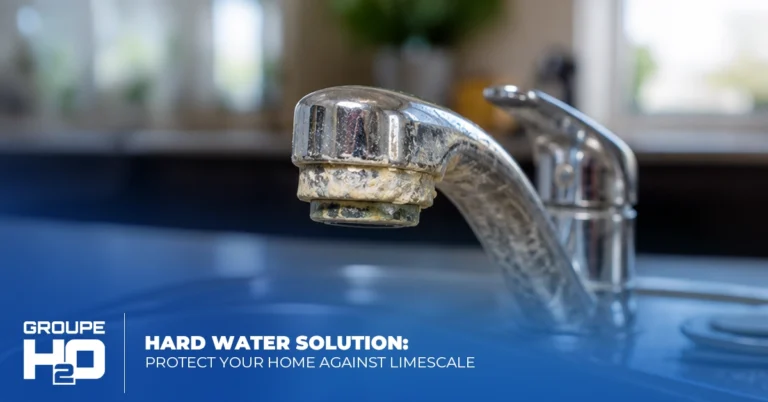
Hard Water Solution: Protect Your Home from Scale
Finding the right hard water solution can address a problem that goes far beyond the white marks visible on faucets. Scale can gradually build up in your water heater, pipes, and household appliances. In a Quebec home or cottage, this buildup can mean more cleaning, reduced flow from certain fixtures,