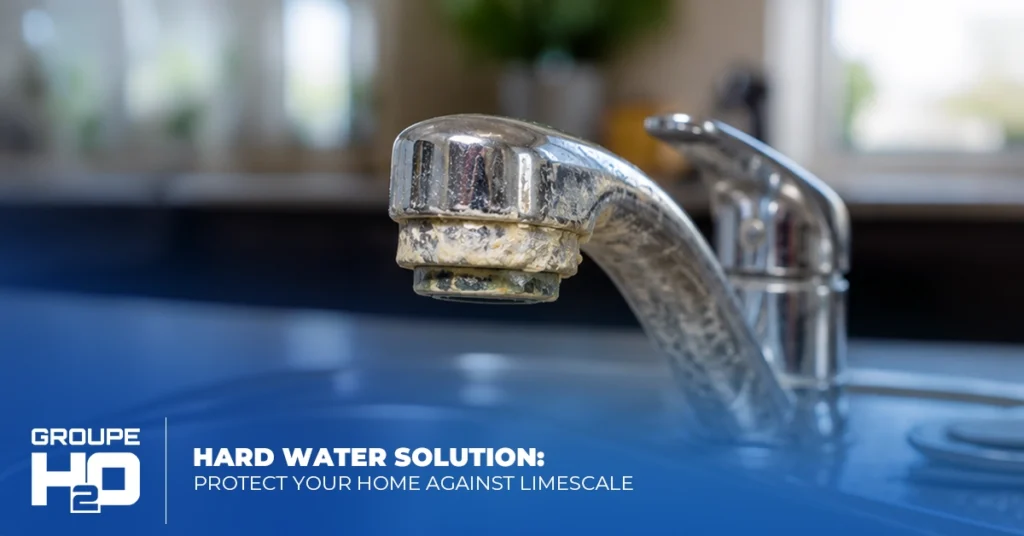
Finding the right hard water solution can address a problem that goes far beyond the white marks visible on faucets. Scale can gradually build up in your water heater, pipes, and household appliances. In a Quebec home or cottage, this buildup can mean more cleaning, reduced flow from certain fixtures, and less efficient water heating.
At Groupe H2O, we help homeowners in St-Donat, Ste-Agathe, Tremblant, and the surrounding areas better understand their water. Our approach begins with identifying the problem before recommending a treatment system suited to the property.
What Exactly Is Hard Water?
Hard water contains a high concentration of dissolved minerals, mainly calcium and magnesium. Water can naturally absorb these minerals as it moves through soil and rock formations before reaching a well or another water supply source.
The presence of calcium and magnesium does not automatically mean that the water is unsafe to drink. Hardness is primarily a practical issue for the home.
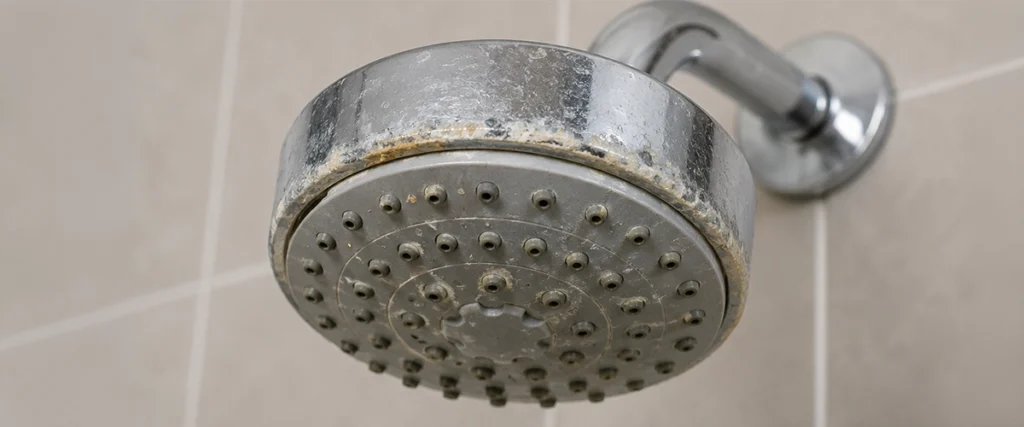
Over time, hard water can leave whitish or grayish deposits on surfaces that come into contact with water. The problem becomes especially noticeable when water is heated or evaporates.
Signs of Hard Water in Your Home
Picture a freshly cleaned kitchen. A few hours later, small white marks reappear around the faucet. In the bathroom, the glass shower door remains cloudy despite regular cleaning. A mineral layer forms at the bottom of the kettle.
These signs may indicate a hard water problem:
- white deposits on faucets and sinks;
- persistent marks on shower doors;
- buildup inside the kettle or coffee maker;
- dull-looking dishes after washing;
- a partially clogged showerhead;
- poor soap lather;
- visible residue in water-using appliances;
- a gradual reduction in flow from certain faucets.
These observations are useful, but they do not replace a water analysis. Iron, manganese, pH, and other parameters can also cause staining, deposits, or changes in the water’s appearance.
How Scale Affects Your Water Heater
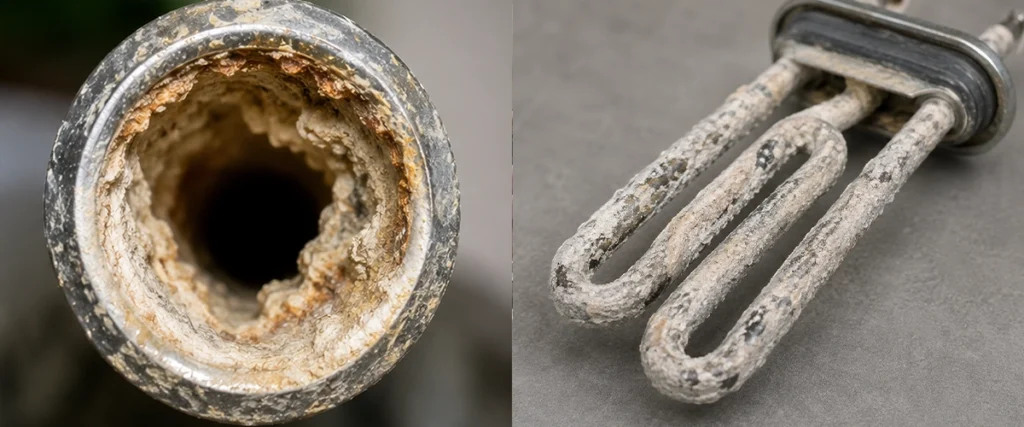
The water heater is one of the appliances most exposed to the effects of hard water. When water is heated, minerals can form scale and settle on heating elements, at the bottom of the tank, or on heat-transfer surfaces.
This mineral layer acts as a barrier between the heating element and the water. It can reduce heat transfer and force the unit to work harder to reach the desired temperature.
Possible consequences include:
- deposit buildup inside the tank;
- reduced heating efficiency;
- more frequent maintenance;
- less usable space inside the tank;
- accelerated wear on certain components;
- higher energy consumption when heat transfer becomes less efficient.
A water heater may continue to operate despite the buildup. The problem often develops slowly and remains hidden until performance begins to decline or repairs become necessary.
Plumbing That Becomes Less Efficient Over Time
Scale can also accumulate inside pipes, on valves, and around the small openings of plumbing fixtures. The buildup will not necessarily block a pipe overnight, but it can gradually reduce its usable diameter.
The most vulnerable areas include:
- faucet aerators;
- showerheads;
- faucet cartridges;
- valves;
- fittings;
- small-diameter pipes;
- household appliance water inlets.
In a family home, cottage, or seasonally occupied property, properly treated water can also make maintenance easier. It helps reduce the time spent scrubbing shower walls, descaling the coffee maker, or cleaning deposits from around faucets.
Which Hard Water Solution Should You Choose?
The right hard water solution depends on the concentration of calcium and magnesium, as well as the water’s overall composition.
Before choosing a system, several factors should be considered:
- the level of hardness;
- the water’s pH;
- the presence of iron or manganese;
- the water source;
- the system’s flow rate;
- the number of occupants;
- the number of bathrooms;
- daily water consumption;
- periods of peak demand;
- the space available for installation.
A large Tremblant home that welcomes several guests on weekends does not have the same needs as a St-Donat residence occupied by two people. The system must be able to meet actual demand without being unnecessarily oversized.
A Water Softener to Remove Calcium and Magnesium
A water softener is a commonly used solution for treating hard water and scale. It operates using an ion-exchange resin.
As water flows through the system, the resin captures calcium and magnesium and replaces them with other ions. Once the resin becomes saturated, it must be regenerated with salt so that it can begin treating the water again.
A properly sized water softener can help:
- reduce scale deposits;
- better protect the water heater;
- limit buildup inside the plumbing system;
- make surfaces easier to clean;
- improve soap performance;
- reduce marks on dishes;
- protect certain household appliances.
At Groupe H2O, our water softeners are specifically designed to address hard water and scale problems. We can also install, maintain, and repair water treatment systems.
Softened Water Must Remain Balanced
Softening water does not necessarily mean removing all of its hardness. Fully softened water can become unbalanced, develop an unpleasant taste, or behave more aggressively toward certain materials.
The treatment setup must therefore take all water analysis results into account. Depending on the water’s characteristics, a neutralizing filter may be incorporated into the system to help maintain its chemical balance.
Maintenance also includes adding the salt required to regenerate the resin. The frequency varies according to the water hardness, consumption, and system programming. For systems offered by Groupe H2O, salt generally needs to be added every two or three months.
What Should You Know About Scale-Control Treatments?
A scale-control treatment is not always the same as a water softener. Some technologies are mainly designed to alter the behavior of minerals in order to reduce their ability to adhere to surfaces, without necessarily removing calcium and magnesium from the water.
This distinction is important.
A scale-control treatment may be suitable when the objective is to reduce deposits. A water softener, on the other hand, removes the minerals responsible for hardness through ion exchange.
The choice therefore depends on the desired result:
- reduce visible deposits;
- obtain genuinely softened water;
- protect a water heater;
- improve soap performance;
- retain certain minerals;
- reduce equipment maintenance.
A technology should not be selected based solely on advertising or price. Its capabilities must match the measured water parameters and the needs of the home.
What Sets a Premium Water Treatment Solution Apart?
A premium treatment is not simply a more expensive appliance. Its value comes from the consistency between the analysis, design, installation, and after-sales service.
A complete solution is based on several elements:
- An analysis that identifies the actual problem.
- A system selected according to the water parameters.
- A capacity suited to the flow rate and water consumption.
- A professional and accessible installation.
- Efficient programming of treatment cycles.
- Components certified for their intended use.
- Preventive maintenance performed at the right time.
- Repair service available when a problem occurs.
An improperly sized system may regenerate too frequently, waste salt and water, or fail to properly treat periods of peak demand. In contrast, a system designed around the property’s actual needs provides more consistent and predictable performance.
Groupe H2O in St-Donat, Ste-Agathe, and Tremblant: Local Expertise
We understand the realities of primary residences, cottages, and seasonal properties in Lanaudière and the Laurentians. Water treatment needs can vary significantly from one address to another, even between neighboring properties.
Groupe H2O has service locations in St-Donat, Ste-Agathe-des-Monts, and Mont-Tremblant. Our team works with water treatment and filtration systems, pumps, wells, and certain specialized plumbing services.
We assist homeowners supplied by private wells, as well as those connected to a municipal water system who want to reduce deposits on their plumbing, water heater, or appliances.
Our services include:
- custom system design;
- equipment installation;
- preventive maintenance;
- problem diagnosis;
- repairs to existing systems;
- advice tailored to the property.
Start by Having Your Water Analyzed
White marks provide an initial clue, but they do not tell the whole story. Before installing a water softener or another treatment system, it is best to determine the exact hardness level and identify any other parameters that may influence the solution.
A water analysis helps prevent the purchase of an unsuitable system and makes it possible to design a treatment plan that fits your water consumption, plumbing, and supply source.
You can visit Groupe H2O in St-Donat, Ste-Agathe, or Tremblant, or contact our team for personalized information and advice. We will help you choose a lasting solution for your water and your home.
Hard Water Solutions FAQ
Is Hard Water Dangerous to Drink?
Hardness is mainly caused by calcium and magnesium. It is generally an operational and maintenance concern rather than a sufficient indicator of contamination. A complete water analysis is still necessary to evaluate water quality.
How Can I Tell Whether My Water Is Hard?
White deposits, marks on shower surfaces, and buildup inside the kettle are common signs. However, only a water analysis can accurately measure hardness and distinguish scale from other water problems.
What Is the Best Hard Water Solution?
An ion-exchange water softener is designed to remove calcium and magnesium. The best setup depends on the hardness level, flow rate, water consumption, and other parameters present in the water.
Does a Water Softener Protect the Water Heater?
By reducing the minerals responsible for water hardness, a water softener helps limit scale formation inside the water heater and on its components. Results depend on proper system sizing, settings, and maintenance.
Can a Treatment System Be Installed on a Municipal Water Supply?
Yes. Water treatment services are not limited to properties supplied by a private well. A system may also be considered to reduce deposits or improve certain characteristics of water supplied by a municipal network.